
mumbai travel places
Gateway of India & Taj Hotel
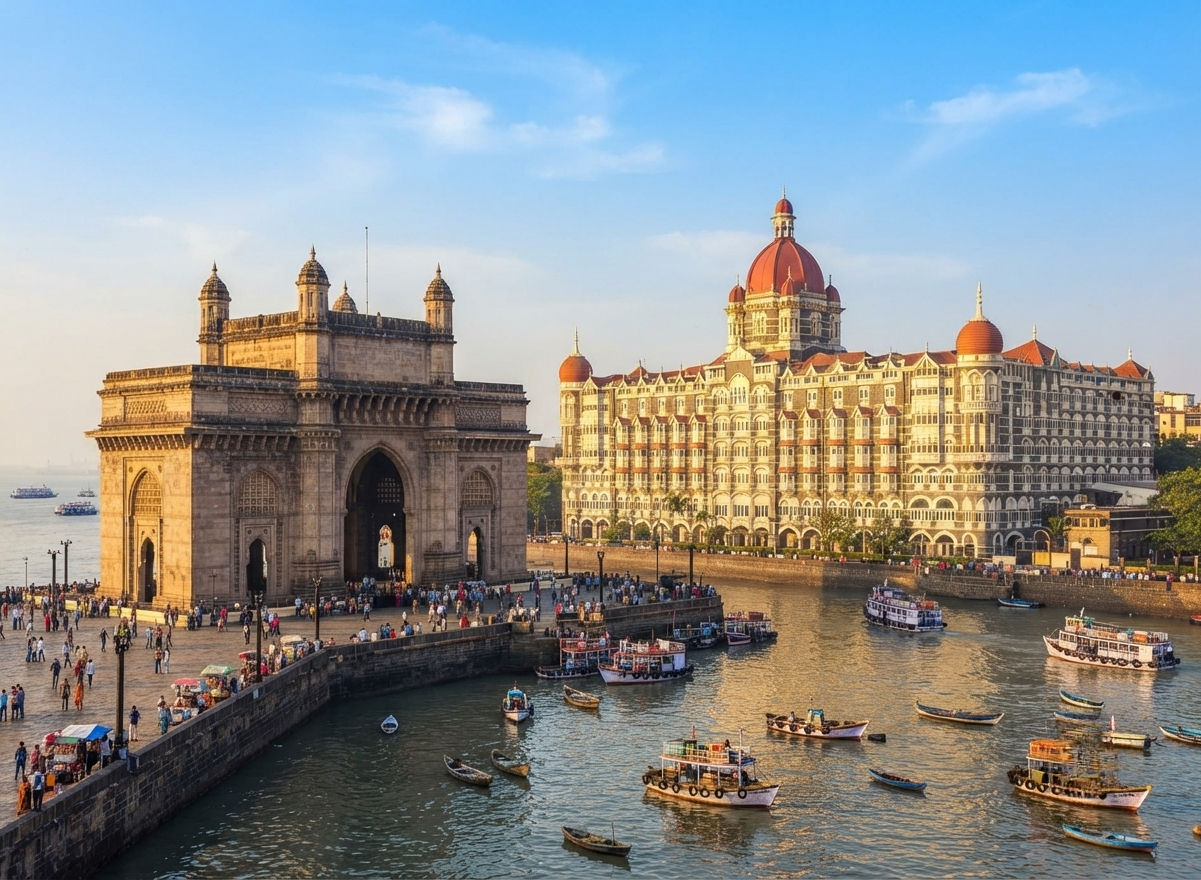
Gateway of India & The Taj Mahal Palace Hotel
Located at the Apollo Bunder waterfront, the Gateway of India is a massive triumphal arch built to commemorate the 1911 royal visit. This basalt monument sits directly opposite the historic Taj Mahal Palace Hotel, creating Mumbai‘s most recognizable architectural pairing. Visitors gather at the open plaza to view the blend of Roman and Gujarati design elements and board local ferries heading across the harbor.
museums
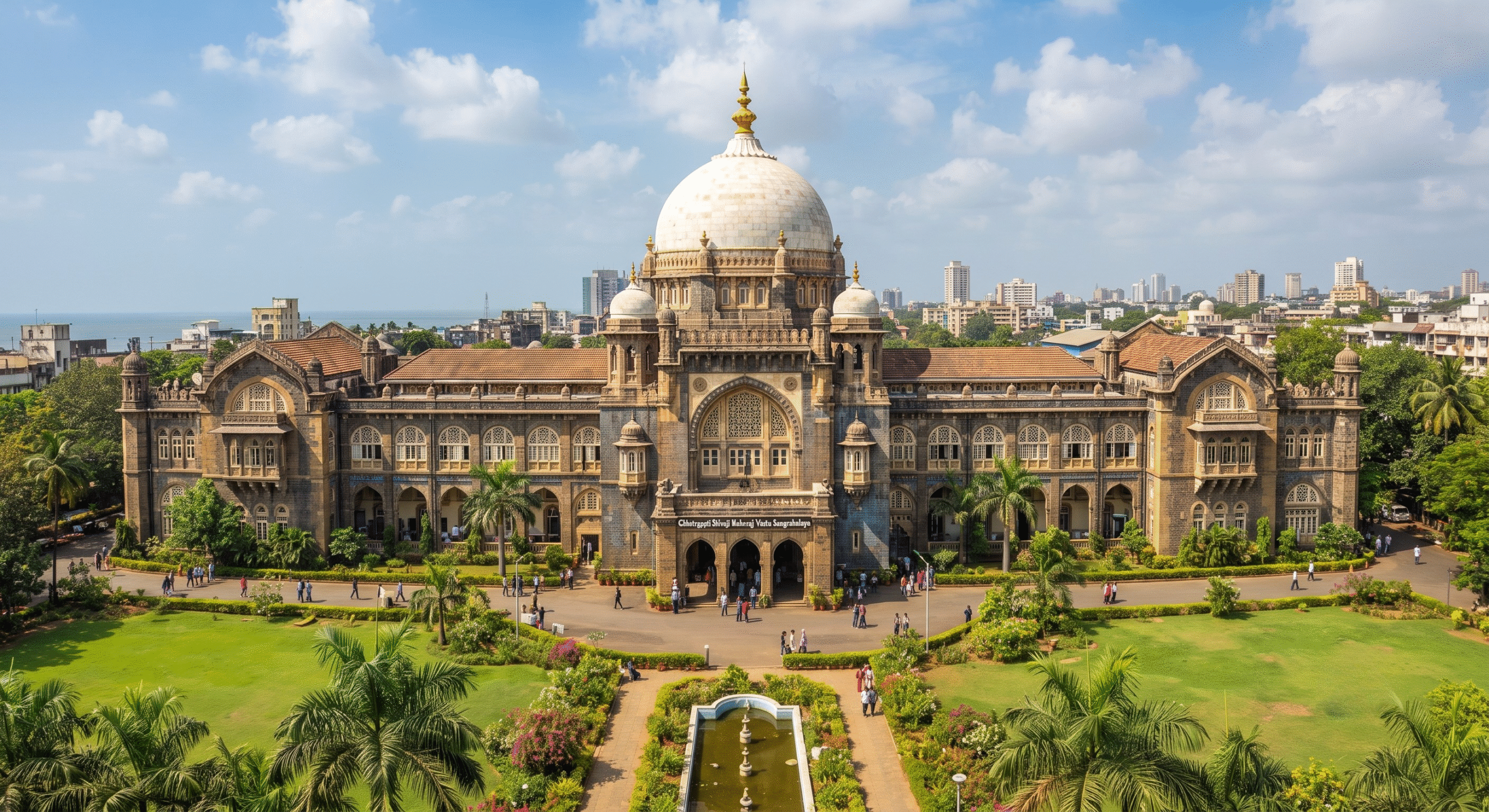
Chhatrapati Shivaji Maharaj Vastu Sangrahalaya
Located in South Mumbai’s Kala Ghoda art district, the Chhatrapati Shivaji Maharaj Vastu Sangrahalaya is a premier Asian historical institution. The Grade I heritage building features a distinct Indo-Saracenic design crowned by a massive stone dome. Founded in the early twentieth century as the Prince of Wales Museum, the galleries now house over 50,000 artifacts detailing the archaeological and artistic development of the subcontinent.
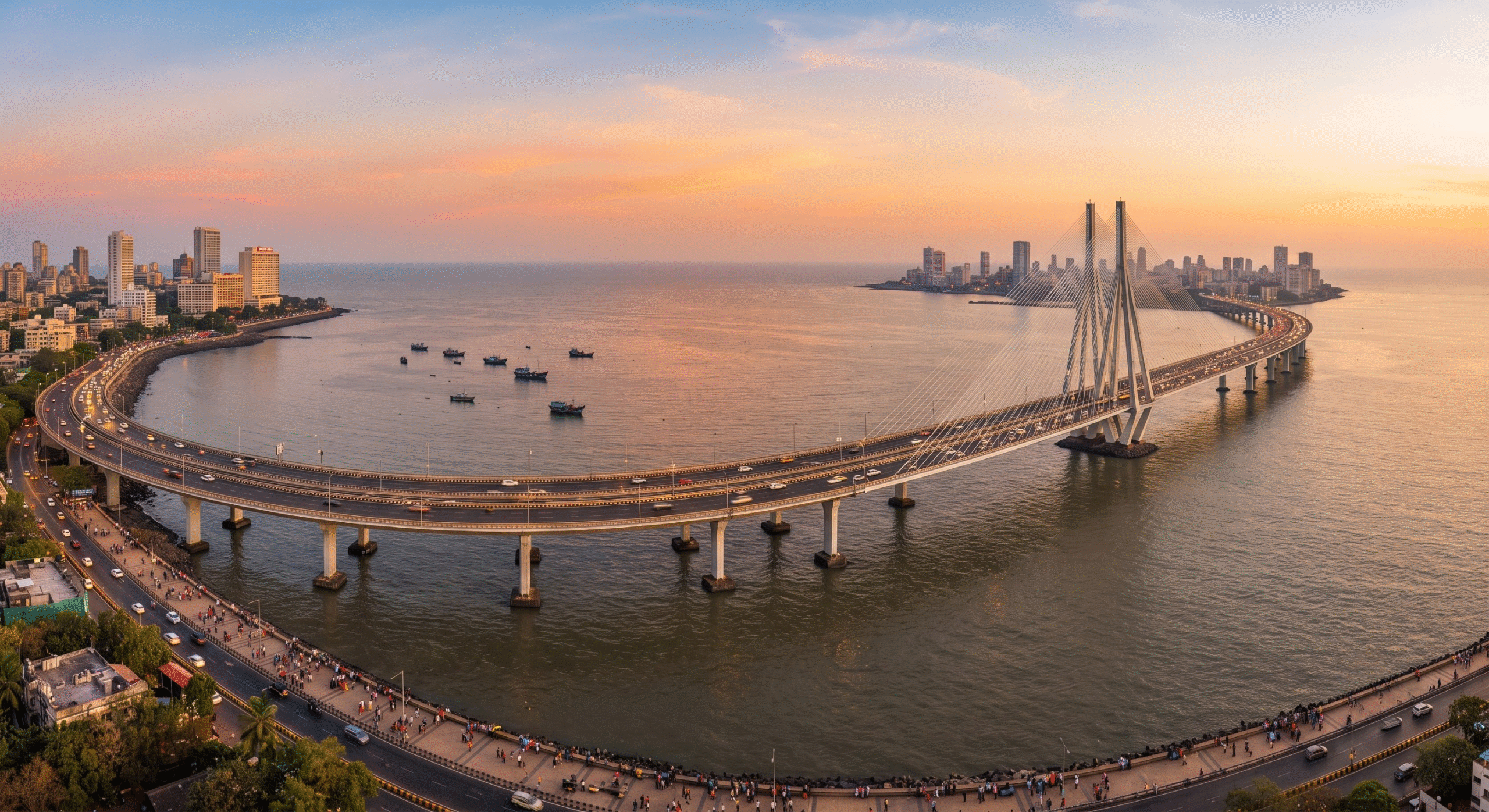
Bandra-Worli Sea Link
The Bandra Worli Sea Link, officially named the Rajiv Gandhi Sea Link, is a major 5.6-kilometer cable-stayed bridge built directly across Mahim Bay. The structure connects the historic South Mumbai business district to the western suburbs, successfully cutting a slow one-hour commute down to just ten minutes. The eight-lane expressway has transformed local transit while offering drivers an open, uninterrupted path across the Arabian Sea.
Mumbai Sea Link
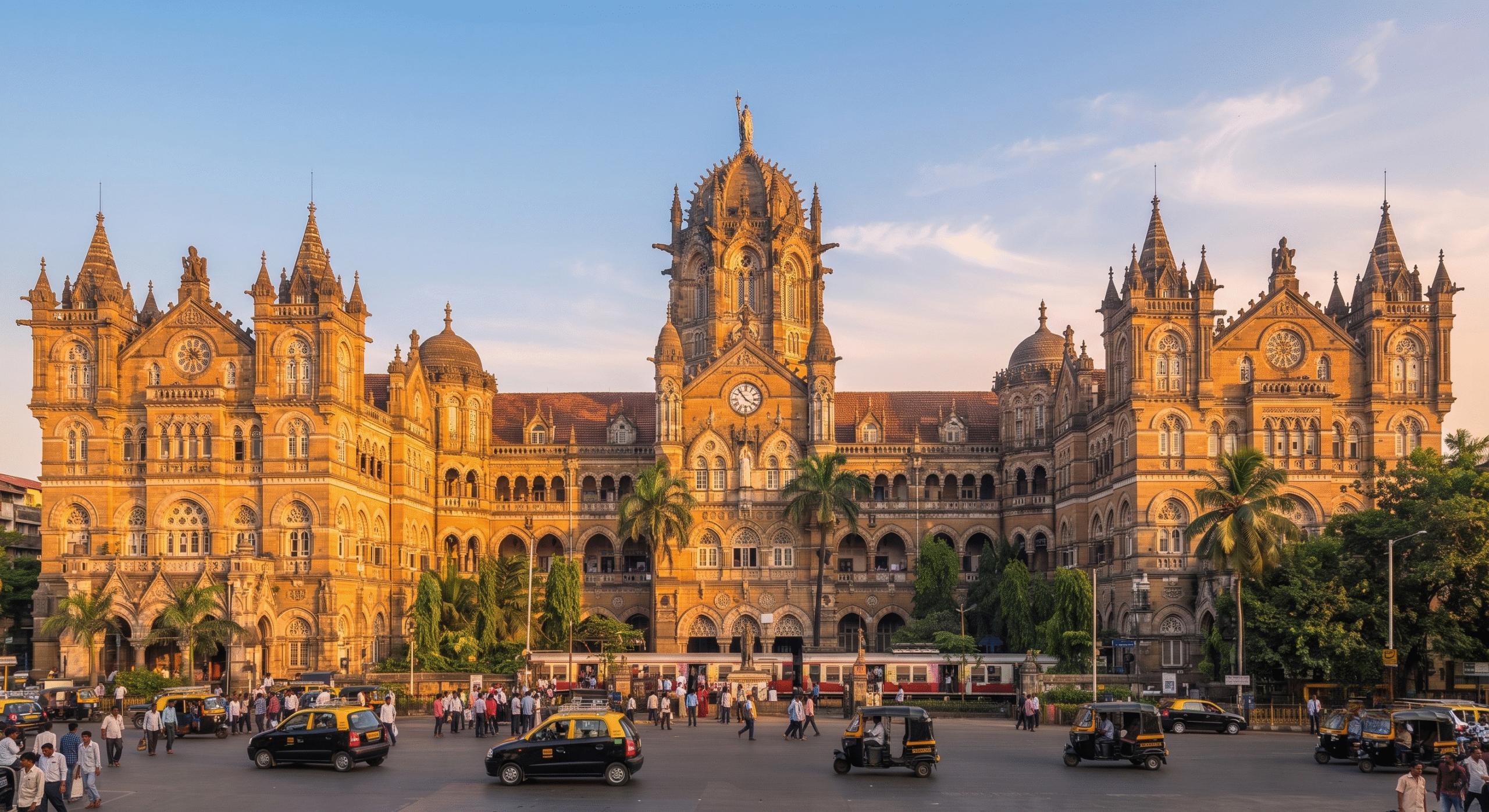
Chhatrapati Shivaji Maharaj Terminus (CSMT)
Chhatrapati Shivaji Maharaj Terminus is a UNESCO World Heritage railway hub completed in 1888. Designed by architect Frederick William Stevens, the station showcases Victorian Gothic Revival design mixed with traditional Indian palace architecture. Formerly known as Victoria Terminus, the historic landmark serving as Central Railway headquarters manages millions of daily commuters while remaining a central architectural anchor in the heart of South Mumbai.
Train station
Elephanta Caves
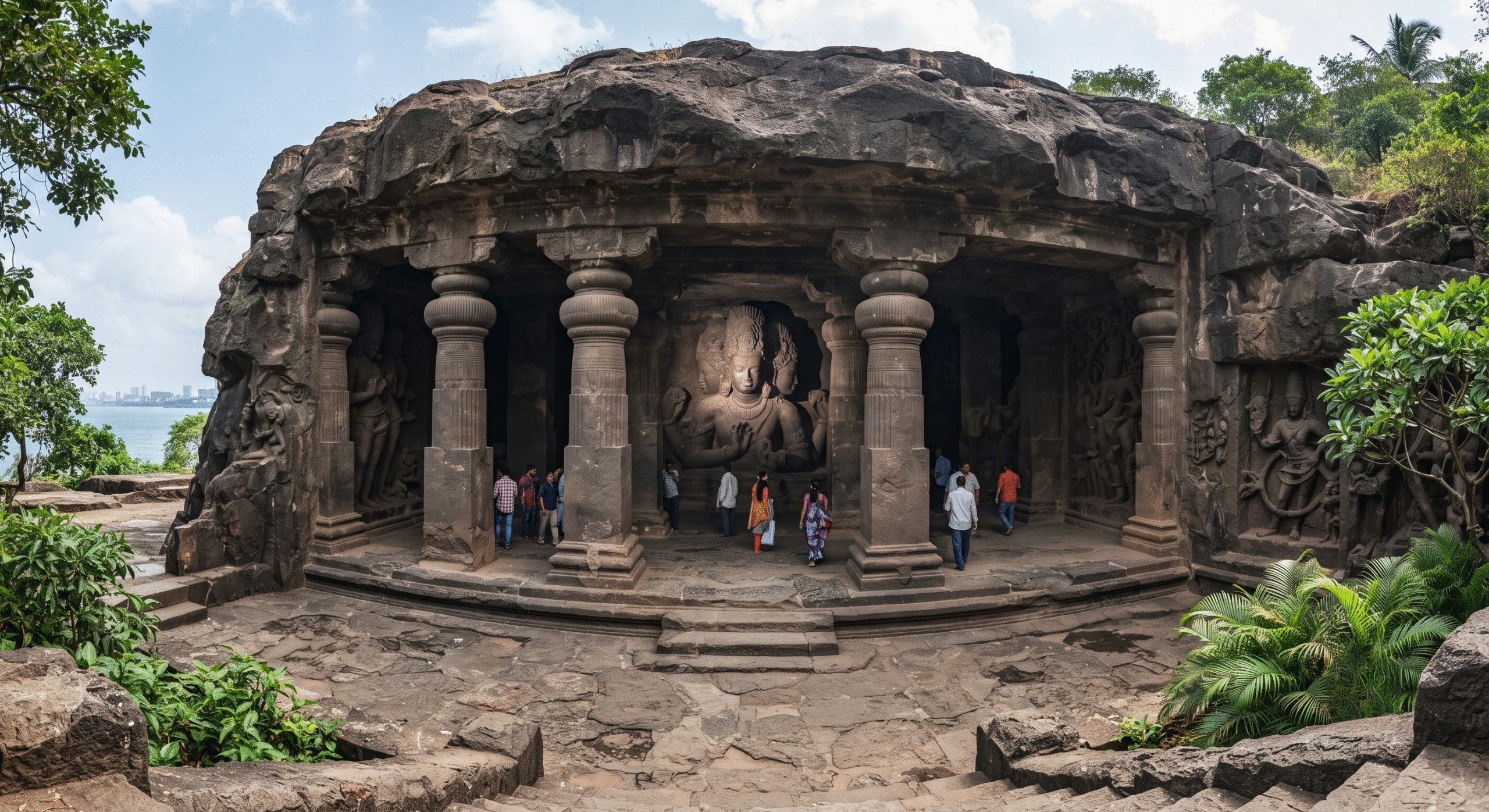
Elephanta Caves
Located on a forested island in Mumbai Harbor, the Elephanta Caves are a UNESCO World Heritage site reachable by local ferry. Originally called Gharapuri, sixteenth-century Portuguese explorers renamed the island after a large stone elephant sculpture. The site features fifth-century rock-cut temples carved directly into basalt hills, centering on massive cave chambers that house detailed relief sculptures dedicated to the cosmic forms of Lord Shiva.
Marine Drive
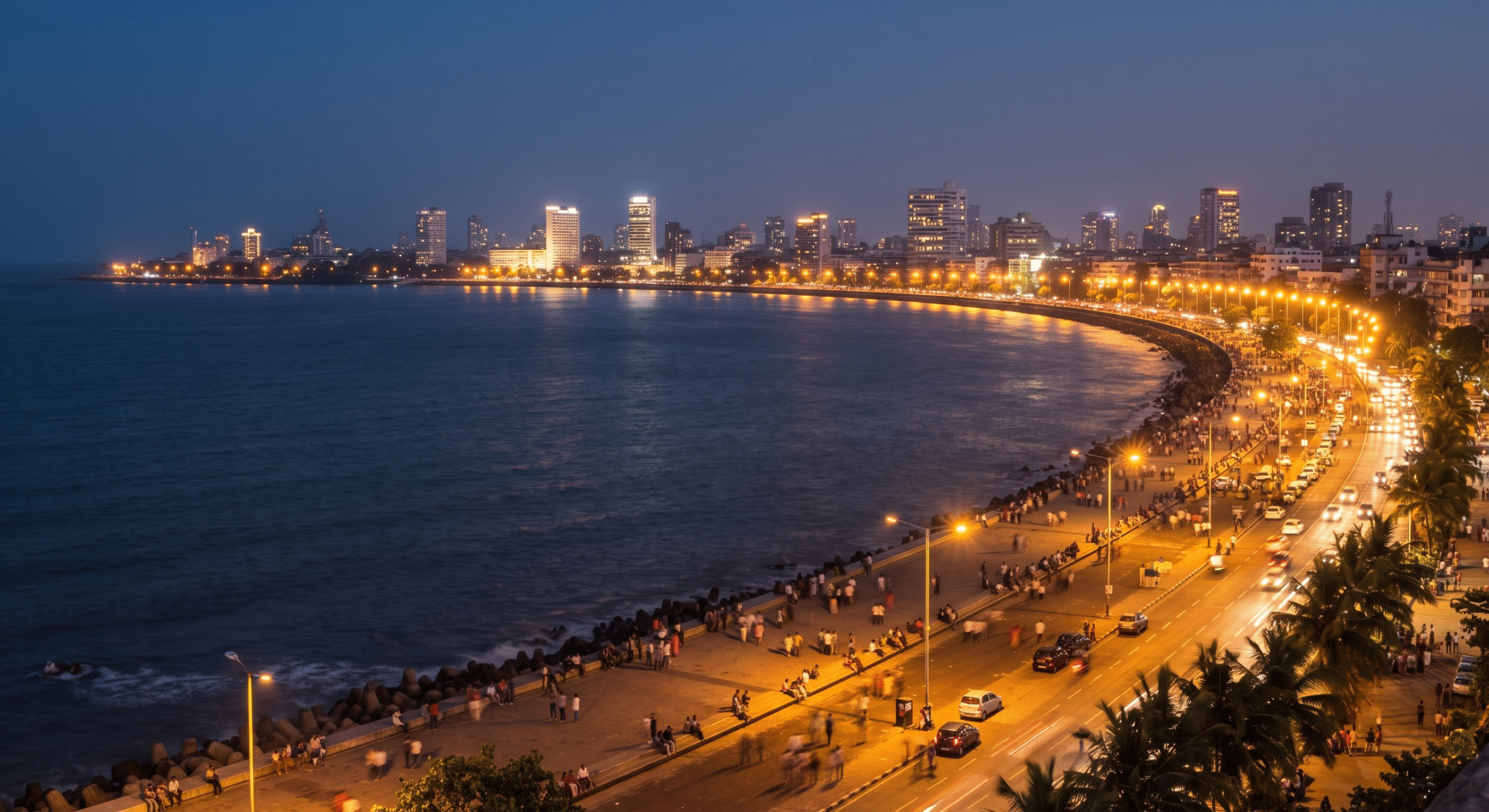
Marine Drive
Marine Drive, officially Netaji Subhash Chandra Bose Road, is a 3.6-kilometer seaside promenade built on reclaimed land in the 1920s and 1930s. Connecting Nariman Point to Malabar Hill, the arc features a prominent concentration of Art Deco architecture facing the Arabian Sea. The curved bay is widely known for its evening views, when the streetlights create the illuminated pattern called the Queen’s Necklace.
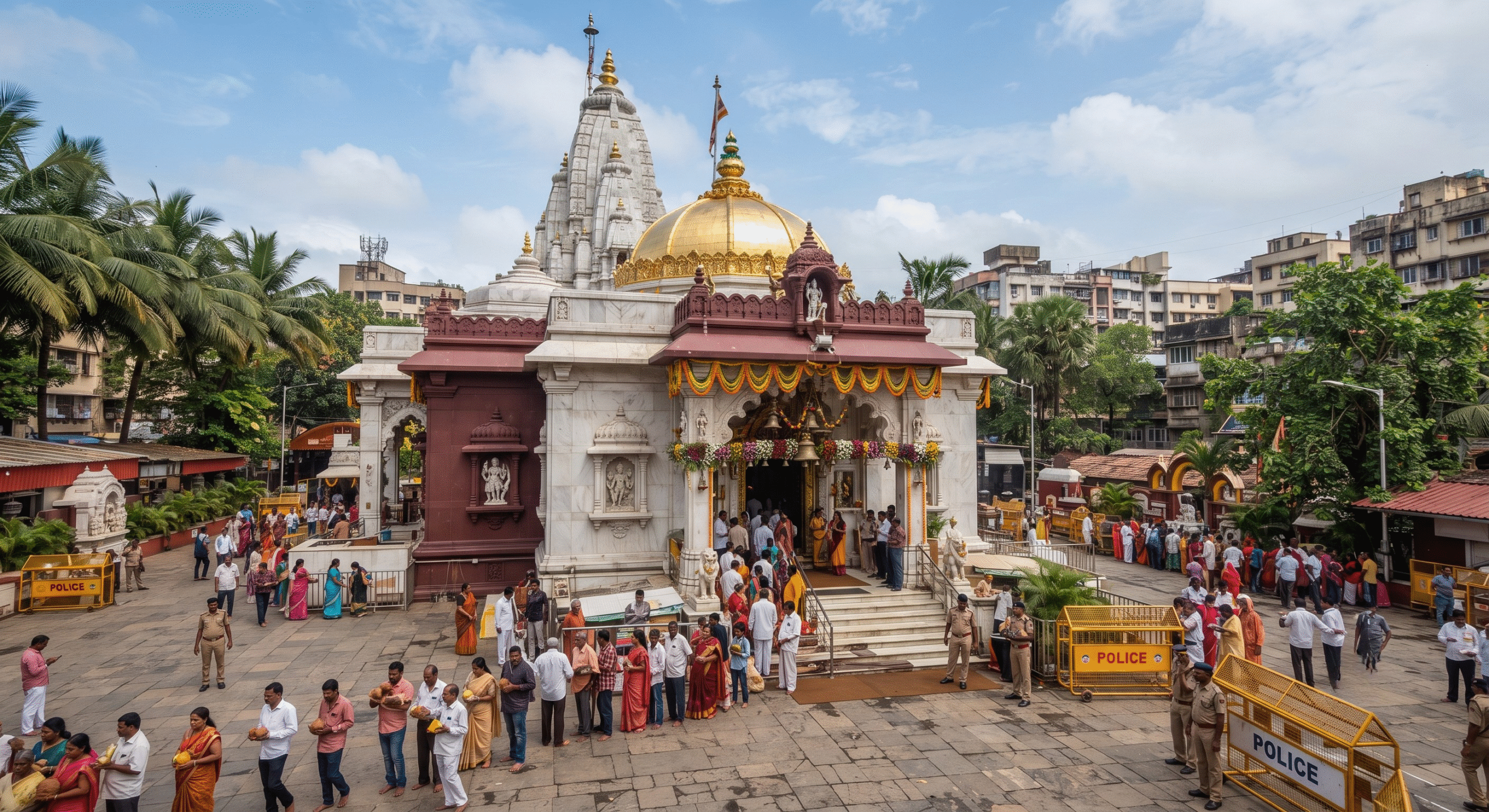
Siddhivinayak Temple
Consecrated in 1801, the Siddhivinayak Temple in Prabhadevi is a prominent religious landmark dedicated to Lord Ganesha. Over two centuries, the site has grown from a small brick structure into a multi-storied complex featuring a gold-plated inner dome. The temple serves as a central spiritual hub in Mumbai, drawing thousands of daily visitors, including local residents, professionals, and public figures seeking blessings.
Siddhivinayak Temple
Haji Ali Dargah
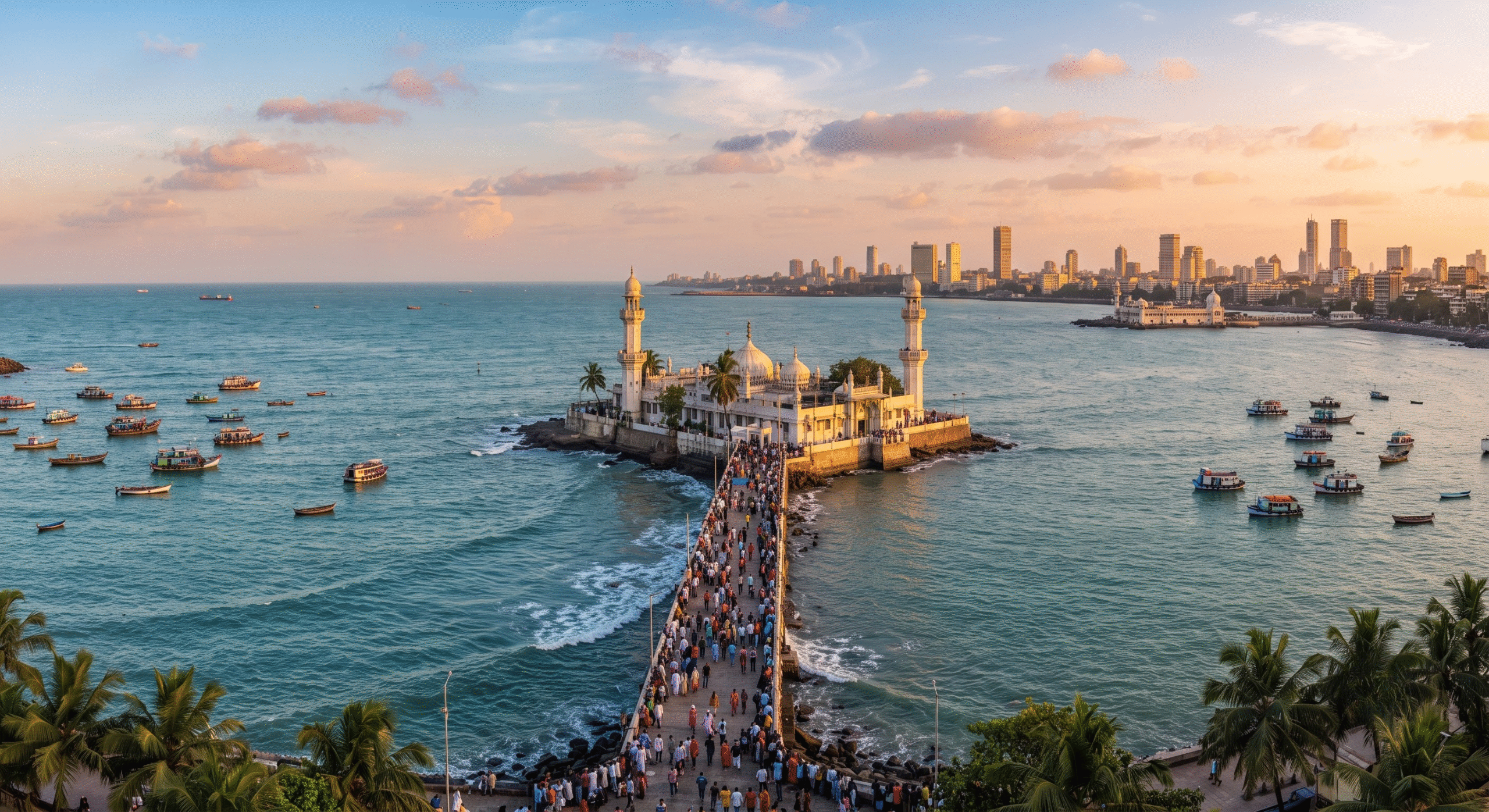
Haji Ali Dargah
Built in 1431, the Haji Ali Dargah is a historic mosque and tomb located on a small islet off the Worli coast. Dedicated to the Sufi saint Pir Haji Ali Shah Bukhari, the Indo-Islamic complex connects to the mainland via a 500-meter causeway. Because high tides completely submerge this narrow pathway, access depends entirely on the sea’s daily cycles, welcoming visitors of all backgrounds.
F.A.Q.
Answer:
The ideal period to visit Mumbai is between October and March when the winter season brings lower humidity and comfortable temperatures. This weather supports walking tours through the historical districts and open outdoor sightseeing. While the monsoon months from June to September present dramatic coastal views, the persistent heavy rainfall frequently disrupts local train and road transport, making the dry winter months more reliable for travel.
Answer:
First-time visitors generally begin in historic South Mumbai, where the Gateway of India stands opposite the Taj Mahal Palace Hotel. The surrounding area allows easy access to the Victorian Gothic architecture of the Chhatrapati Shivaji Maharaj Terminus. Moving along the coast, the Marine Drive promenade offers wide sunset views, while the harbor ferries provide transit to the fifth-century rock-cut temples on Elephanta Island.
Answer:
A three-day itinerary provides a balanced timeline to explore Mumbai’s major districts without rushing.
Day 1: The first day focuses on the historical architecture, museums, and waterfronts of South Mumbai
Day 2: The second day moves inland toward central landmarks, including the Siddhivinayak Temple and the Bandra-Worli Sea Link expressway.
Day 3: The final day covers the offshore Elephanta Caves ferry trip or the commercial markets of the western suburbs.
Answer:
Mumbai is generally considered one of the safest and most accessible cities for travelers in India. While the local population is welcoming, the high-density crowds and complex public transportation networks can be difficult to navigate alone. Although independent travel is common, hiring a private vehicle with a local driver helps bypass municipal traffic bottlenecks and simplifies transit between the city’s spread-out historical monuments.
Answer:
Visiting Haji Ali Dargah requires timing your trip around the ocean’s patterns because the shrine sits on an offshore islet. The low concrete causeway connecting it to the Worli coast becomes entirely impassable during high tide. Travelers must consult daily local tide schedules to ensure they cross during low-water windows, making real-time tracking essential for a safe, uninterrupted walk to the main complex.